

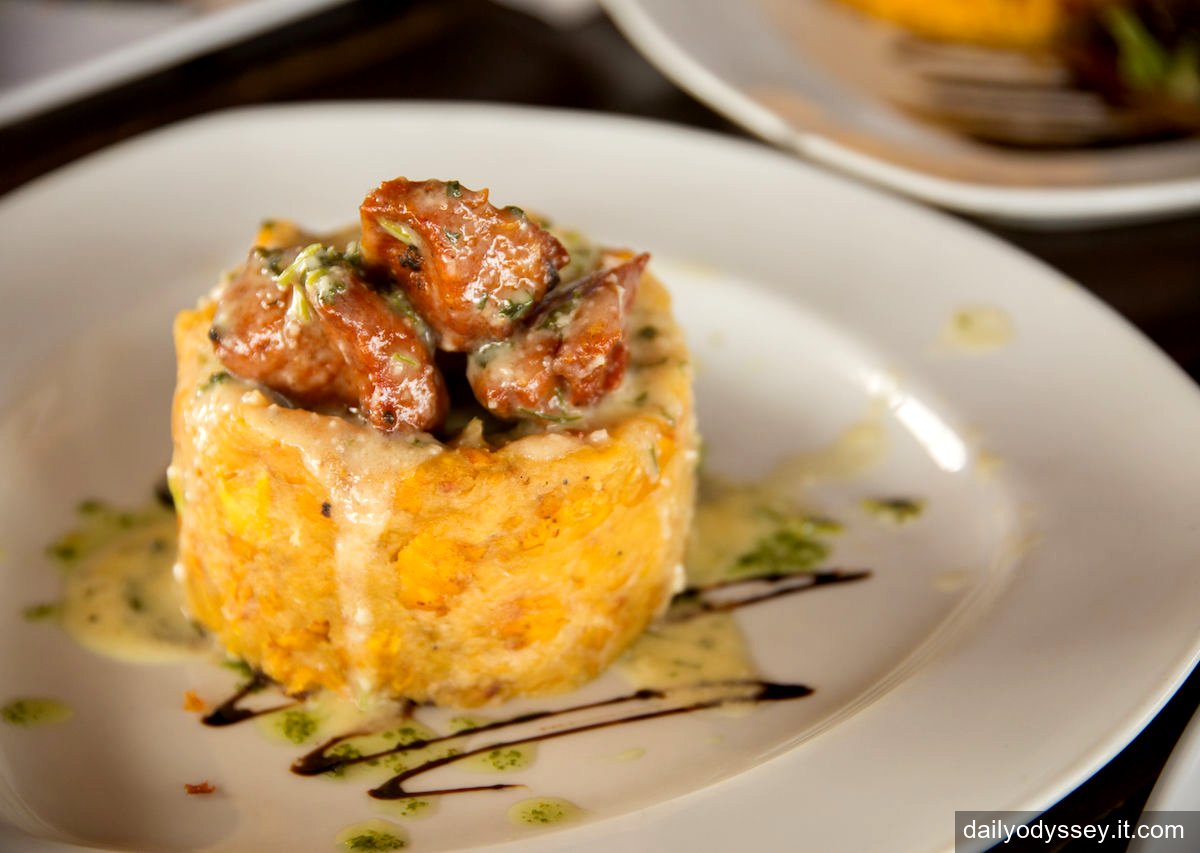
Searching for Best Mofongo Near Me usually means you want more than a plate of fried plantains. You are looking for mofongo that is hot, garlicky, savory, freshly mashed, and satisfying from the first bite.
Mofongo is one of Puerto Rico’s best-known traditional foods. The dish is built around green plantains that are fried and then mashed with ingredients such as garlic, salt, and pork crackling, butter, or oil. It may be served on its own, alongside broth, or with meat, seafood, or vegetables.
The difference between an average plate and an exceptional one often comes down to simple things: fresh plantains, proper frying, enough garlic, balanced seasoning, and good texture.
If you are exploring Puerto Rican restaurants in your area, knowing what authentic mofongo should taste and feel like can help you choose a much better meal.
What Is Mofongo?
Mofongo is a traditional Puerto Rican dish made primarily from green plantains. The plantains are fried, then mashed while hot, usually in a wooden mortar and pestle called a pilón.
Garlic and salt provide much of the dish’s characteristic flavor, while chicharrón, butter, or oil can add richness and texture. Some preparations are served with a savory broth because the dense plantain mixture benefits from additional moisture.
The texture is particularly important. Good mofongo should not feel like a completely smooth puree. You should notice a hearty, slightly coarse texture with flavorful pieces of pork crackling or other ingredients throughout.
As chef Raúl Correa explained to Smithsonian, the plantains should retain some texture rather than being mashed into a completely uniform mixture. That balance helps create the distinctive crunchy-soft character associated with the dish.
Why Mofongo Is Important to Puerto Rican Food Culture
Mofongo is more than a popular restaurant entrée. It reflects Puerto Rico’s complicated culinary history and the influence of different communities on the island’s food traditions.
Puerto Rican culture has been shaped by Taíno, African, and Spanish influences, and those influences can be seen across the island’s cuisine. Discover Puerto Rico describes mofongo as one of the traditional foods that represents this broader culinary heritage.
Food historians have connected mofongo’s preparation technique with African traditions of pounding starchy foods using a mortar and pestle. Taíno food practices also involved pounding ingredients in pilones, while Spanish influence became part of Puerto Rican cooking through ingredients and techniques used in dishes such as sofrito.
That history is one reason mofongo feels so distinctive. It is a dish with a simple ingredient list but a remarkably deep cultural story.
What Makes the Best Mofongo Near Me?
Finding good mofongo is not only about choosing the restaurant with the highest rating. You want to know whether the kitchen understands how the dish should be prepared.
1. Fresh Green Plantains
The foundation is the plantain. Traditional mofongo uses green plantains, not the soft, sweet ripe plantains commonly served as maduros.
Green plantains are firm and starchy, which makes them suitable for frying and mashing. The quality and freshness of the plantain have a noticeable effect on the finished dish.
2. Fresh Garlic
Garlic is one of the flavors that gives mofongo its unmistakable personality.
A good version should have a noticeable garlic aroma without allowing the garlic to overpower every other ingredient. Freshly prepared garlic generally gives the dish a brighter and more aromatic flavor than a bland, pre-prepared mixture.
3. Proper Texture
Texture is where many versions succeed or fail.
The plantains should be cooked enough to mash properly but should still retain some structure. Smithsonian’s reporting on traditional preparation specifically highlights the importance of avoiding a completely smooth mash so that some texture remains in each bite.
If the mofongo arrives extremely dry, gummy, or completely smooth, it may not deliver the experience you were expecting.
4. A Good Balance of Richness
Traditional preparations may include pork crackling, butter, or oil. These ingredients add richness and help create the savory character associated with mofongo.
The best versions balance that richness rather than making every bite excessively greasy.
5. Fresh Preparation
Mofongo is a dish where freshness matters.
Because the plantains are fried and mashed, the texture is best when the dish is prepared close to serving time. Chef Raúl Correa described the process as labor-intensive, involving frying the plantains and mashing them while hot in a pilón.
That is why a restaurant making mofongo fresh to order can have a major advantage over one relying on food that has been sitting for a long time.
How to Find the Best Mofongo Near Me
When searching online, start with terms such as best mofongo near me, Puerto Rican restaurant near me, authentic Puerto Rican food, or mofongo relleno.
Then look beyond the star rating.
Read recent customer reviews and look for comments about freshness, garlic flavor, texture, portion size, sauces, fillings, and whether the mofongo was served hot.
Photos can also help. Look for a properly formed mound or bowl of mofongo accompanied by broth, sauce, seafood, chicken, pork, or another traditional filling.
Another useful clue is the rest of the menu. A restaurant specializing in Puerto Rican cuisine may also serve dishes such as arroz con gandules, tostones, lechón, pasteles, or alcapurrias. These foods are recognized as important parts of Puerto Rican culinary traditions.
“The best mofongo is not necessarily the fanciest one; it is the one where the plantain, garlic, seasoning, and filling work together.”
Where Should You Look for Authentic Mofongo?
Do not automatically assume that the most expensive restaurant serves the best mofongo.
Family-owned Puerto Rican restaurants, neighborhood restaurants, casual Caribbean kitchens, and smaller local establishments can all be worth exploring.
In fact, the dish’s labor-intensive preparation means that some restaurants may not serve it at all. Smithsonian’s reporting notes that even in San Juan, not every restaurant offers mofongo because preparing it properly requires considerable time and effort.
That makes checking the menu before visiting especially useful.
If you find a restaurant where mofongo is clearly treated as a specialty rather than an afterthought, it may be worth trying.
Popular Types of Mofongo to Try
One of the best things about searching for Best Mofongo Near Me is discovering how many versions of the dish are available.
Classic Mofongo
Classic mofongo focuses on the fundamentals: fried green plantain, garlic, seasoning, and a savory element such as pork crackling.
It may be served as a side dish or as the centerpiece of a meal with broth or another accompaniment.
This is the version to order if you want to understand the basic flavor and texture of mofongo.
Mofongo Relleno
Mofongo relleno is stuffed mofongo.
The plantain mixture is shaped to create space for a filling, which can include seafood, chicken, beef, pork, crab, vegetables, or other preparations. Discover Puerto Rico lists several of these fillings among contemporary mofongo options.
For first-time diners who want a complete entrée, this can be an excellent choice because the filling adds moisture and another layer of flavor.
Seafood Mofongo
Seafood is a popular pairing for mofongo.
Shrimp, crab, octopus, and other seafood preparations can work especially well because sauces and seafood juices add moisture to the dense plantain mixture.
If you enjoy garlic-based seafood dishes, ask whether the restaurant offers mofongo with shrimp or another seafood filling.
Chicken Mofongo
Chicken is another practical choice, particularly when it is served with a savory stew or sauce.
Tender stewed chicken provides moisture and contrast to the fried plantain base, making the meal hearty without requiring an especially rich seafood preparation.
Pork Mofongo
For a traditional, deeply savory experience, pork is hard to overlook.
Pork crackling is already associated with traditional mofongo preparations, while other restaurants may pair the dish with fried pork or roasted pork. Discover Puerto Rico identifies lechón asado as another important Puerto Rican food tradition, making pork-based pairings a natural choice for a classic meal.
Trifongo
Trifongo gives the classic idea a different texture and flavor.
It combines green plantain, sweet plantain, and yuca, creating a mixture with more variation than traditional plantain-only mofongo. This is one of the recognized variations of the dish.
If you enjoy both sweet and savory flavors, trifongo can be an interesting alternative.
What Should You Order With Mofongo?
Mofongo is filling, so the best side depends on how substantial you want your meal to be.
A simple salad or avocado can provide freshness against the richness of the plantains. If you want a more traditional Puerto Rican plate, you can look for sides such as arroz con gandules or tostones.
A savory broth is another important accompaniment. Traditional preparation and serving styles often pair mofongo with broth to add moisture and balance the dense plantain mixture.
If the restaurant offers broth separately, ordering some on the side is a smart move, especially if you prefer softer, more moist bites.
How to Order Mofongo for the First Time
If you have never tried mofongo before, keep your first order simple.
Ask the server:
- Is the mofongo made fresh to order?
- What filling is most popular?
- Does it come with broth or sauce?
- Can the broth or sauce be served on the side?
- Is the dish made with pork crackling, butter, oil, or another ingredient?
For a first experience, classic mofongo with a savory broth is a good way to understand the base flavor.
If you already know you enjoy seafood, shrimp or seafood mofongo can be an excellent next choice.
Dine-In or Takeout: Which Is Better?
Mofongo is generally at its best when eaten soon after preparation.
The plantain mixture can become firmer as it cools, while sauces and broth can change the texture during transportation.
For that reason, dining in is often the better option if you want to experience the dish immediately after it leaves the kitchen.
If you prefer delivery, consider asking the restaurant to package sauces or broth separately. This gives you more control over the final texture when you are ready to eat.
How to Tell if Your Mofongo Is Well Prepared
When your plate arrives, pay attention to a few simple details.
The mofongo should look freshly formed rather than dried out. You should notice the aroma of garlic and the savory character of the ingredients used in the mash.
When you take a bite, the texture should have some body. It should not feel like a completely smooth paste.
The filling, if included, should also complement rather than completely overwhelm the plantain. A good mofongo meal works because each component has a purpose.
Is Mofongo a Main Dish or a Side Dish?
It can be either.
Traditional mofongo can appear as a side dish, but modern restaurant menus frequently present it as a substantial entrée with meat, seafood, chicken, or other fillings. Discover Puerto Rico specifically notes that mofongo can be served as a side dish or stuffed with a wide range of fillings.
If you are hungry, a stuffed mofongo can easily serve as a complete meal.
If you are sharing several Puerto Rican dishes, a smaller portion of classic mofongo can work well alongside other foods.
Mofongo vs. Tostones: What’s the Difference?
Both dishes begin with green plantains, but the preparation is different.
Tostones are green plantain pieces that are fried, flattened, and fried again. Mofongo, meanwhile, involves frying plantain pieces and then mashing them with garlic and other ingredients.
Discover Puerto Rico describes tostones as double-deep-fried plantain wheels, while mofongo is made from deep-fried green plantains that are mashed.
So, if you want something crisp and easy to share, try tostones. If you want something hearty, garlicky, and substantial, mofongo is the better choice.
What to Look for in Restaurant Reviews
When searching for Best Mofongo Near Me, don’t read every review from beginning to end. Look for specific phrases that tell you something about the food.
Good signs include:
- “Freshly made”
- “Lots of garlic”
- “Great texture”
- “Tender plantains”
- “Excellent broth”
- “Generous filling”
- “Authentic Puerto Rican flavor”
- “Served hot”
Be more cautious if several recent customers independently mention dry plantains, excessive oil, bland seasoning, cold food, or long delays.
A single negative review does not necessarily mean a restaurant is bad. Repeated comments about the same issue are much more useful.
Why Mofongo Remains So Popular
Mofongo has survived and evolved because it combines something familiar with something distinctive.
The ingredients are straightforward, but the preparation creates a completely different eating experience from simply serving fried plantains.
It is hearty enough for a full meal, flexible enough to pair with seafood or meat, and culturally significant enough to represent an important part of Puerto Rican cuisine.
Discover Puerto Rico continues to identify mofongo among the island’s staple foods, alongside dishes such as tostones and lechón asado.
That combination of comfort, history, and versatility explains why diners continue looking for authentic mofongo far beyond Puerto Rico.
Final Tips for Finding the Best Mofongo Near Me
If you want to make your search easier, focus on freshness, preparation, texture, and restaurant reputation rather than simply choosing the closest result.
Look for a Puerto Rican restaurant that clearly describes its mofongo, offers several traditional fillings, and receives recent praise for the food itself.
Start with classic mofongo if you are new to the dish. Try seafood, chicken, pork, or another filling once you know what you like.
Most importantly, eat it hot and give the dish time to show you why it has remained such an important part of Puerto Rican food culture.
The next time you search for Best Mofongo Near Me, do not settle for the first result that appears. Look for the place that respects the plantain, gets the garlic right, prepares the dish fresh, and serves it with the kind of warmth that makes a traditional meal memorable.
Frequently Asked Questions
What is mofongo made of?
Mofongo is traditionally made from fried green plantains mashed with garlic and ingredients such as pork crackling, butter, oil, or salt. Some versions are served with broth or filled with meat, seafood, or vegetables.
What does mofongo taste like?
Mofongo is generally savory, garlicky, rich, and starchy, with texture coming from the fried plantain and ingredients such as pork crackling. The exact flavor depends on the seasoning, fat, filling, and sauce used.
Is mofongo spicy?
Traditional mofongo is not necessarily spicy. Its main flavors typically come from garlic, salt, plantain, pork or another savory ingredient, and accompanying sauces. A restaurant may offer spicy sauces or fillings separately.
What is mofongo usually served with?
Mofongo can be served with broth, meat, seafood, vegetables, or sauces. Common preparations include stuffed mofongo with chicken, crab, octopus, steak, pork, seafood, or vegetables.
Is mofongo the same as mashed plantains?
No. Although mashed green plantain is the foundation, mofongo also incorporates ingredients such as garlic and pork crackling, butter, or oil, and it is traditionally prepared by pounding the fried plantain mixture in a pilón.
What should I try if I have never eaten mofongo?
Start with classic mofongo served with a savory broth. Once you know you enjoy the flavor and texture, try a stuffed version with shrimp, chicken, pork, seafood, or another filling.
Can mofongo be vegetarian?
Yes. Traditional recipes often include pork crackling, but modern preparations can use plant-based ingredients instead. Some restaurants offer mofongo with vegetables or other meat-free fillings.
Is mofongo better for dine-in or delivery?
Mofongo is generally best when eaten hot and fresh. If ordering delivery, asking for broth or sauce separately can help you maintain a better texture.
Final Takeaway
Finding the Best Mofongo Near Me is really about finding the right combination of fresh green plantains, garlic, seasoning, texture, and a flavorful filling or broth.
The dish may look simple, but its preparation carries generations of Puerto Rican culinary tradition. From classic mofongo to seafood-filled versions and trifongo, there is plenty to explore.
So the next time you see mofongo on a Puerto Rican menu, give it a try. Start with the traditional version, pay attention to the texture, and then explore the fillings that make this iconic dish so versatile.
